



I have been freelancing for more than 10 years now.
That sounds like a long time when I say it out loud.
Long enough to see platforms change.
Long enough to watch tools come and go.
Long enough to see certain freelance skills become more valuable, others become easier to automate, and client expectations keep shifting.
And if there is one thing I have learned after all these years, it is this:
You do not stay relevant by assuming what worked before will always be enough.

Freelancing does not stand still
When I first started, the freelance industry looked very different.
You could build a profile, send proposals, develop a reputation, and grow from there.
Those things still matter.
But now there are more tools, more competition, more automation, more AI, and more clients expecting freelancers to understand how all of these things fit together.
The standard keeps moving.
That does not scare me.
It just reminds me that freelancing has always required adaptability.
The people who stay useful are usually the ones willing to keep learning.
I do not chase every trend
I think this is important.
There is a difference between chasing everything new and paying attention to what is changing.
I do not need to learn every platform.
I do not need to use every AI tool.
I do not need to jump on every trend just because everyone else is talking about it.
But I do pay attention.
I watch what clients are starting to ask for.
I notice which tools are becoming part of normal workflows.
I notice which freelance skills are becoming easier to automate and which ones still require judgment, creativity, communication, and strategy.
And when something feels like it could become useful later, I learn it.
Not because I need it today.
Because I might need it tomorrow.
Why freelancers fall behind
Freelancers do not always fail because they lack talent.
Sometimes they stop adapting.
They keep offering the same thing in the same way while the market, technology, client expectations, and the way people work all continue to change.
That does not mean you need to reinvent yourself every month.
It does not mean chasing every new platform or tool.
It means staying close enough to the market to notice when the rules are shifting.
One of the biggest mistakes a freelancer can make is getting too comfortable with what used to work.
A strong skill can still become less competitive if the way clients use that skill changes.
A good service can still lose demand if the market expects more.
And experience, while valuable, can become limiting if it turns into resistance to learning.
I think that is one of the reasons freelancers fail or fall behind.
Not because they are incapable.
Because they stop evolving.
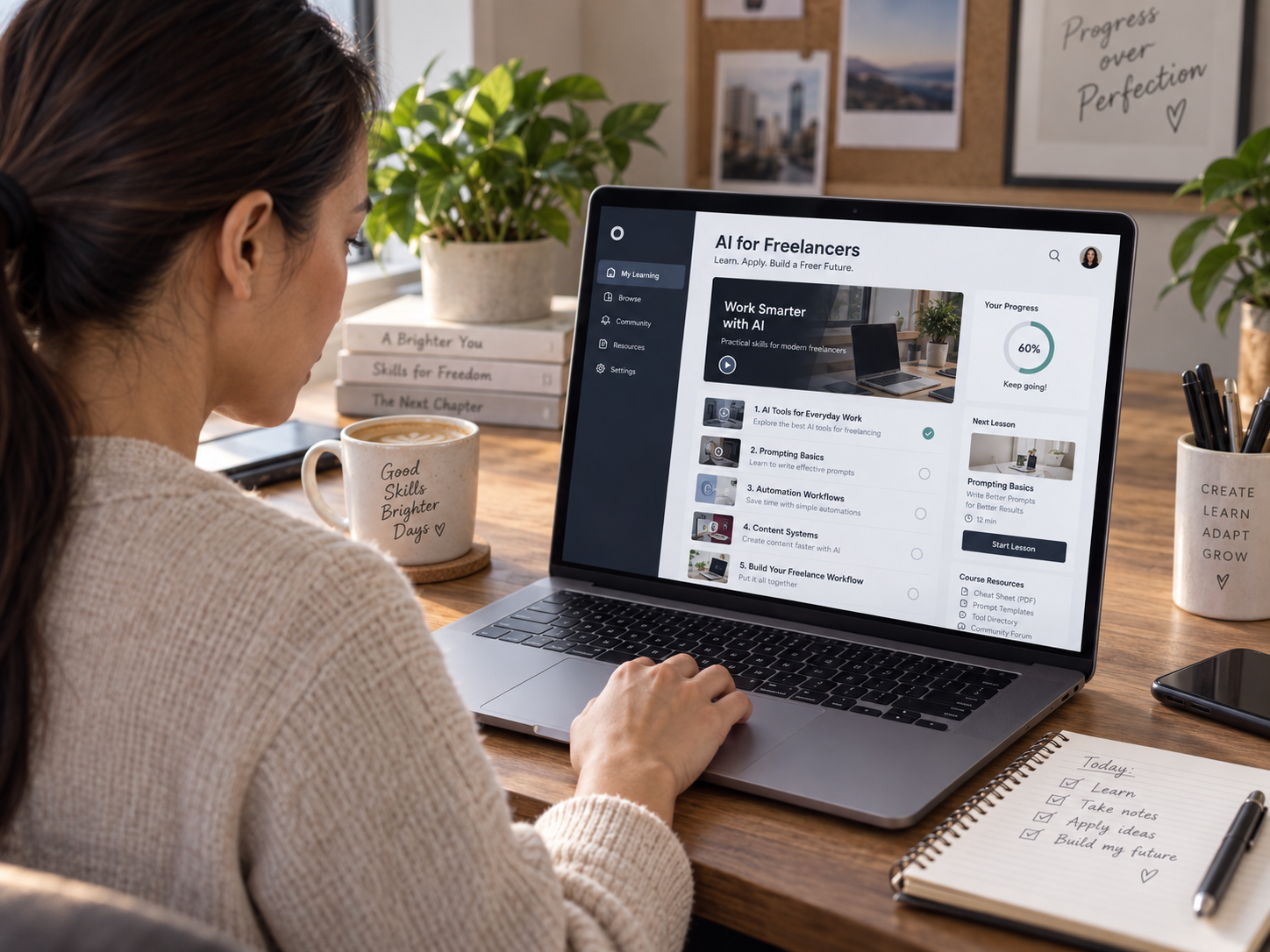
That is why I started learning cinematic AI
I have managed social media, written content, built strategies, worked with clients, and adapted to different platforms for years.
But lately, I have also been learning cinematic AI.
Not because I am trying to become something completely different.
Not because I think every freelancer suddenly needs to become an AI expert.
I am learning it because I can already see where it could fit.
A client may need more creative video content.
A brand may want a different kind of storytelling.
Someone may need AI-generated visuals, concepts, or short-form videos.
And if that happens, I would rather already understand the tool than start learning only when the request lands in my inbox.
That has always been part of how I work.
I like being ready before I have to be.
AI did not kill freelancing. It changed the standard.
I do not believe AI made freelancers irrelevant.
I think it changed what being valuable looks like.
Knowing how to complete a task is still important.
But now, knowing how to think, adapt, use tools well, communicate clearly, and make good decisions matters even more.
A tool can help write.
It can help design.
It can help edit.
It can help generate ideas.
It can help speed up certain parts of the work.
But it still needs someone who knows what the output is supposed to achieve.
That is where experience becomes important.
The longer I freelance, the more I realize that clients are not only paying for tasks.
They are paying for judgment.
They are paying for consistency.
They are paying for someone who can look at a problem, understand what actually needs to happen, and move things forward.
AI can support that.
It does not automatically replace it.

Experience is valuable, but only if you keep evolving
There is a strange thing that can happen when you have been doing something for a long time.
You get comfortable.
You know what works.
You have systems.
You have proof.
You have experience.
And all of that is valuable.
But experience can also make you slower to change if you start believing you already know enough.
I never want to get to that point.
I would rather be experienced and curious.
I would rather know what I am good at and still be willing to be a beginner at something new.
I think that mindset has helped me more than any single tool ever has.
You do not need to learn everything
This is probably where people overwhelm themselves.
They see AI.
They see new software.
They see new platforms.
They see people talking about automation, video, content, design, strategy, analytics, and suddenly it feels like you need to master all of it.
You do not.
You just need to stay close enough to the market to understand what is changing.
Then ask yourself:
What actually makes sense for the kind of work I want to do?
What would make me more useful?
What would make my work better?
What could help me solve a client problem faster or more creatively?
What new skill could strengthen the service I already offer?
That is enough.
Learning should support your direction, not distract you from it.
The skills still matter
Even with all the new tools, some things have not changed much at all.
Clients still value people who communicate.
People who meet deadlines.
People who do what they said they would do.
People who can think independently.
People who do not disappear when things get difficult.
People who care about the quality of the work.
Those things are not trendy.
But they are still bankable.
And when you combine those qualities with the willingness to keep learning, you become much harder to replace.

Staying relevant as a freelancer is an active choice
I think this is what people sometimes underestimate about a long freelance career.
You do not stay relevant by accident.
You stay relevant because you keep paying attention.
You keep noticing what clients need.
You keep refining your skills.
You keep learning new tools without abandoning the strengths that already made you good at what you do.
You keep adapting without losing your identity.
And sometimes, you learn something before you even know exactly how you will use it.
That is okay.
Because staying relevant is not about predicting the future perfectly.
It is about being ready enough to move when the opportunity appears.
I am still learning because the market is still changing
After more than a decade of freelancing, I could easily say I have enough experience.
But I do not want to think like that.
There is always something to learn.
A new tool.
A better process.
A different way to create.
A smarter way to work.
A skill that may not matter today but could matter a year from now.
The freelance rules keep changing.
So I keep learning.
Not because I am starting over.
Because I want to stay ready for whatever comes next.
And if you are building your own freelance career, I think that is one of the best things you can do too.
Stay curious.
Stay useful.
Stay willing to evolve.
That is how you stay in the game.
If you are earlier in your freelance journey and still figuring out how to turn what you already know into your first offer, this is exactly what I walk through in Turn Your Skills Into Your First Freelance Income.
👉 Read the guide: Income Builder

.png)