.png)


When people talk about freelancing, they usually focus on the highlights.
Landing big clients.
Working from anywhere.
Replacing your nine-to-five income.
What almost nobody talks about is the rhythm behind it.
Freelancing moves in cycles.
There are seasons where your inbox is full, projects overlap, and your calendar feels packed. It becomes harder to make space for yourself. Your workouts slip. Eight hours of sleep feels like a luxury. Even your quiet weekend time starts to feel impossible. Then there are quieter periods where work slows down and you start asking yourself uncomfortable questions.
Did I lose my momentum?
Did I do something wrong?
Is freelancing still worth it?
If you have felt this before, you are not failing. You are experiencing something almost every freelancer goes through.
The freelance income cycle.
The Busy Season
There are times in freelancing when everything feels aligned.
Clients reach out.
New opportunities appear.
Projects overlap in the best possible way.
You are juggling deliverables, responding to messages, and sometimes wondering how your schedule filled up so quickly.
These seasons feel exciting, but they can also be overwhelming.
When work is constant, many freelancers make the mistake of saying yes to everything. The logic feels simple. If the work is here, take it.
But busy seasons are also the time when you should be thinking about the next phase of the cycle.
Because the busy season never lasts forever.
.png)
The Quiet Season
Eventually, things slow down.
A contract ends.
A client pauses a project.
A company restructures their marketing budget.
Sometimes several things change at once.
This is the moment when many freelancers panic.
But quiet seasons are not always a sign that something is wrong. They are part of the rhythm of independent work.
Clients operate on their own timelines. Projects start and end. Businesses shift priorities.
Freelancers who survive long term understand that the quiet season will arrive eventually.
The key is not avoiding it. The key is preparing for it.
The Growth Season
Something interesting often happens during quieter periods.
You have space again.
Space to learn.
Space to refine your skills.
Space to build systems that improve your work.
This is when many freelancers quietly level up.
Instead of chasing projects out of panic, the smartest move during a slower period is to invest in yourself.
Learn a new skill.
Improve an existing service.
Spend more time on your own income streams.
Organize your workflow.
Develop better client processes.
Growth seasons often look slow on the surface, but they are where long term progress happens.
The Stability Season
Eventually the cycle stabilizes.
You develop repeat clients.
Your reputation improves.
Projects start arriving through referrals or invitations instead of constant outreach.
Work becomes less chaotic.
The goal of freelancing is not to eliminate cycles entirely. That is almost impossible.
The real goal is to make each cycle less stressful than the last.
With experience, you begin to trust the rhythm.
Busy seasons build your income.
Quiet seasons build your foundation.
Both are necessary.
What Most Freelancers Learn Too Late
One of the biggest lessons in freelancing is understanding that income stability does not happen by accident.
It comes from preparation.
Freelancers who thrive long term usually do a few things consistently.
They save money during busy seasons.
They maintain strong relationships with clients.
They keep improving their skills even when work is flowing. (This has become my habit!)
They accept that the rhythm of freelancing includes both expansion and pause.
Once you understand the cycle, slow periods stop feeling like failure.
They start feeling like part of the process.
The Cycle Is Normal
If you are in a quiet season right now, it does not mean your freelance career is collapsing.
It may simply mean you are between waves.
Freelancing is not linear.
It moves.
The more experience you gain, the more predictable the cycle becomes.
And eventually, you stop fearing the quiet periods because you know another wave of work will come.
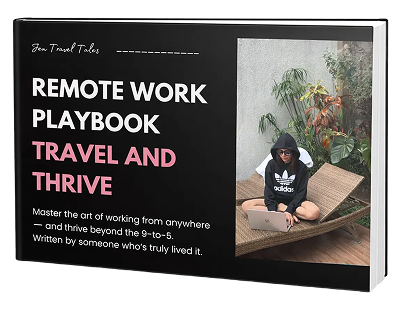
If you are building a freelance or remote career and want a clearer structure for making this lifestyle sustainable, my ebook Remote Work Playbook: Travel & Thrive walks through the mindset, systems, and practical strategies that helped me create a work from anywhere life that actually works.
Because freelancing is about building something that lasts, not just freedom.